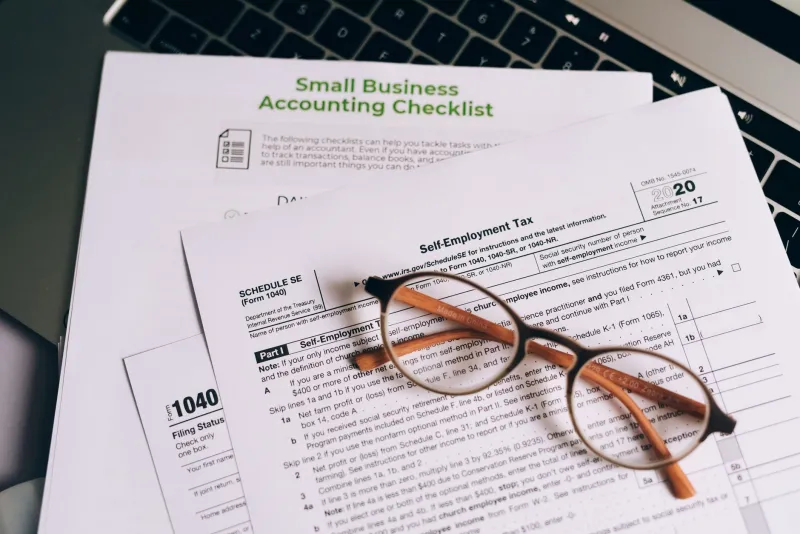
When Giving Is Personal: Charitable Donations and the Sole Trader’s Accounts in 2026

Photo: Francisclarke, CC BY-SA 4.0, via Wikimedia Commons
Charitable giving is a personal decision. For a sole trader, however, the payment often leaves a business bank account, appears in the bookkeeping software and looks, at first glance, like any other outgoing. In 2026/27 the tax treatment still turns on a simple distinction: a personal donation is not a trading expense. The account it came from does not change its character.
The bank account is not the test
A sole trader’s taxable profit is based on income and allowable expenses. An expense is allowable when it is incurred wholly and exclusively for the trade. A gift to a charity is not incurred for that purpose; it is made from the owner’s personal funds, even if the mechanics involve the business account. The same principle generally applies to partners making personal donations. The donation should be recorded as drawings or a partner’s personal payment, not as a business cost.
Partnerships can make their own donations in some circumstances, but the accounting and tax analysis needs care. The safe starting point is that an individual partner’s personal giving stays outside the partnership’s profit and loss account. If the partnership itself makes a payment, take advice before deciding how it should be allocated and reported.
How Gift Aid works instead
Gift Aid is the route for individuals. When a UK taxpayer makes a qualifying donation to a recognised charity, the charity can reclaim basic-rate tax from HMRC — currently 25p for every £1 donated. The donor must give a Gift Aid declaration and must have paid enough UK Income Tax or Capital Gains Tax in the year to cover the tax reclaimed.
Gift Aid does not reduce trading profit. It reduces the individual’s tax bill through the tax system. Basic-rate taxpayers usually see no further benefit because the charity has already reclaimed the basic-rate amount. Higher-rate and additional-rate taxpayers may be able to claim extra relief through Self Assessment. Scottish and Welsh taxpayers should check how devolved rates affect the calculation.
Not every payment qualifies. A donation must be a gift, not a payment for goods, services, advertising or event hospitality. If the donor receives a benefit, the charity’s rules and HMRC’s benefit limits determine whether Gift Aid can apply. Raffle tickets, auction purchases and sponsorship packages are common examples where the payment may not be a straightforward donation.
What to record, and where
For a sole trader, the bookkeeping entry is the first control. If a donation is paid from the business bank account, post it to drawings — or to the director’s loan account in a company — rather than to a business expense category. That keeps the profit and loss account clean and preserves the paper trail.
Keep the charity’s receipt or confirmation, the bank statement entry, the date and amount, and a copy or confirmation of the Gift Aid declaration where you made one. If the donation is made jointly, record who gave what. For Self Assessment, keep the donation details and the charity’s name so the personal relief can be entered correctly.
Do not claim VAT on a donation. A donation is not consideration for a supply, so it is normally outside the scope of VAT. Adding a donation to an invoice for goods or services can also create confusion: the payment may be treated as part of the sales price, not as a separate gift.
When the business is a limited company
A limited company follows a different route. Company charitable donations are not made under Gift Aid. They are paid gross, and a qualifying donation may be deductible for Corporation Tax if the conditions are met. The company should record the payment as a donation in its own accounts and keep the charity’s receipt.
The company cannot pass on Gift Aid relief to its directors or shareholders. If a company pays what is in substance a director’s personal donation, the bookkeeping matters: the payment may need to be treated as a director’s loan or as remuneration, depending on the facts. It should not simply be labelled as a business donation without evidence.
Common errors to correct before the year end
- Posting a personal donation to marketing, subscriptions or sundry expenses.
- Assuming Gift Aid applies because the payment went to a registered charity.
- Using the company’s name on a donation that was intended to be personal.
- Claiming VAT on a donation or on an invoice line described as a donation.
- Forgetting to record the Gift Aid declaration and receipt.
- Treating a payment for a fundraising event as a pure donation when a benefit was received.
- Leaving a director’s personal donation in the company accounts without clearing the loan account.
A practical year-end check
Before the accounts are finalised, review all payments to charities and fundraising bodies. Ask three questions: who made the gift, what did they receive in return, and what evidence is on file? If the answer is that the owner made a personal gift, remove it from business expenses and record it as drawings. If the company made the gift, confirm the Corporation Tax treatment and keep the receipt. If Gift Aid was used, check the declaration and make sure the personal tax return reflects the donation.
That simple separation protects the trading accounts, supports any Gift Aid claim and avoids a year-end adjustment that turns a generous gesture into an unnecessary tax query.